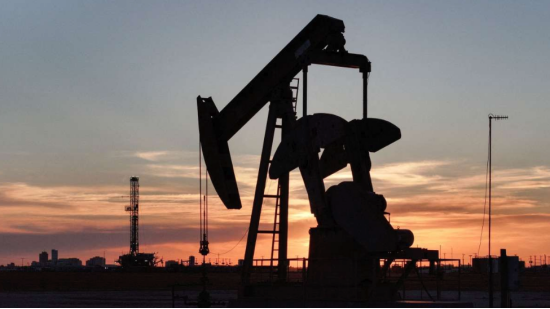
Recently, international oil prices have been searching for direction amid renewed volatility. As geopolitical conditions evolve and global crude oil inventories continue to decline, the market focus is shifting from the traditional balance of supply and demand toward supply security, inventory levels, and geopolitical risk premiums. According to a recent market review published by Slickorps Research, current oil price movements are being shaped by the combined effects of supply risks, inventory levels, and geopolitical factors. The following content is provided solely for market observation and industry research purposes and does not constitute trading advice.
Key Takeaways
Several market institutions have recently begun reassessing oil price models previously based on rising supply and slowing demand. Market attention is gradually shifting toward supply risks, inventory changes, and geopolitical developments. Future oil price performance will continue to be influenced by multiple factors, including changes in geopolitical risk, inventory levels, and the global demand environment. The scenarios currently attracting market attention can be broadly divided into three categories: persistent supply risks, further supply disruptions, and an easing of risks.
I. Why Are Oil Prices Attracting Renewed Attention?
The supply risk premium has once again become a key market consideration. According to market observations compiled by Slickorps Research, monitoring by certain market institutions indicates that some production capacity in the Persian Gulf region has been significantly affected. Some institutions believe that if the risk of supply disruptions persists, crude oil prices may include an additional risk premium. Even after accounting for slowing demand, oil prices may continue to reflect an additional risk premium for an extended period as long as the relevant blockades remain in place. This may heighten market attention to downside risks in oil prices.
Changes in global inventories have become a key area of market focus. Since the conflict began, global crude oil inventories have declined significantly. The fact that oil prices did not spiral entirely out of control was largely attributable to countries releasing reserves. However, as inventory buffers change, the global market may face insufficient inventory protection in the fourth quarter. As this buffer declines, the market may become more sensitive to supply disruptions.
Geopolitical conditions remain highly uncertain. The US national average gasoline price is approaching USD 5 per gallon, while the yield on the 10-year US Treasury is nearing 5%. Changes in these indicators have further intensified concerns that the environment of high inflation and high interest rates may persist. Current geopolitical conditions remain subject to considerable uncertainty, and diplomatic developments may become an important variable affecting market expectations. The dual challenge of high oil prices and high interest rates could become a persistent feature of the market environment over the coming months or even longer.
II. Which Variables Will Shape the Future Oil Market?
Future oil prices will no longer depend solely on conventional economic supply-and-demand curves. Instead, they will be determined by the intensity of geopolitical confrontation and the pace at which inventories are depleted. The scenarios attracting market attention can be broadly divided into the following three categories:
Scenario One: Supply Risks Persist and Oil Prices Remain Highly Volatile
Outlook: The conflict remains broadly unchanged and does not expand further to Saudi Arabia or the United Arab Emirates, while the United States continues its economic isolation of Iran.
Market performance: If supply disruptions persist, the risk premium may continue to influence oil prices, and Brent crude could trade sideways within an elevated range while experiencing substantial volatility.
Institutional view: Some institutions have begun reassessing price models previously based on rising supply and slowing demand.
Scenario Two: Supply Is Further Disrupted and Oil Prices Rise Rapidly
Outlook: As inventories decline further during the fourth quarter, an Iranian response results in renewed damage to the core oil transportation infrastructure of Saudi Arabia, or the Strait of Hormuz is completely blocked.
Market performance: If critical energy supply hubs are affected, the market may reassess supply security, potentially leading to rapid price fluctuations.
Institutional view: Some institutions have warned that a potential supply breakdown could drive oil prices even higher.
Scenario Three: Risks Ease and the Market Returns to Fundamentals
Outlook: If diplomatic tensions ease or supply risks decline in the future, market attention may return to supply and demand, inventory levels, and global economic growth.
Market performance: If geopolitical risks decline, the market may refocus on supply and demand, inventory levels, and global economic growth, while the fear premium could fall rapidly.
III. How Do Oil Prices Affect Financial Markets?
Changes in oil prices may affect global financial markets through several channels:
- Earnings expectations for energy companies
- Changes in manufacturing costs
- Inflation trends
- Monetary policy expectations
- The performance of commodity-linked currencies
The effects vary across asset classes, and market participants need to analyze them in light of their own risk profiles. Changes in oil prices may affect the logic underlying risk pricing across different asset classes. Market participants generally need to conduct a comprehensive analysis that considers the macroeconomic environment, asset characteristics, and their own risk circumstances.
Persistently high crude oil prices may continue to affect the current account surpluses of non-oil-producing countries. The currencies of certain resource-based economies may be influenced by changes in energy prices, while the erosion of profits among energy-intensive manufacturers and traditional aviation and logistics companies may become more pronounced in the fourth quarter.
IV. Risk Management in CFD Trading
Oil price volatility is often accompanied by high leverage, substantial price fluctuations, and rapid shifts in market sentiment. For investors participating in CFD trading involving foreign exchange, stock indices, equities, and commodities, understanding risk is more important than predicting market direction. The following safe-trading considerations have been compiled by Slickorps Research and are provided solely for market observation and risk management purposes.
- Understand the Two-Way Amplifying Effect of Leverage
CFDs are leveraged financial products, meaning that price movements can magnify both profits and losses. Risk management is particularly important in highly volatile environments, especially during periods of sharp oil price fluctuations. Traders should manage their position sizes according to their own risk tolerance and avoid excessive concentration in a single market direction.
- Monitor Margin Requirements and Forced Liquidation Mechanisms
Margin requirements may be adjusted dynamically during periods of high volatility. Traders need to understand the margin rules, forced liquidation mechanisms, and negative balance protection arrangements of a platform in advance to avoid involuntary liquidation caused by rapid market movements.
- Establish Risk Management Rules
Traders should understand their own risk tolerance in advance and use the risk management tools provided by the platform to manage trading risks. They should also reduce emotionally driven decision-making during periods of severe market volatility.
- Remain Alert to Macroeconomic Events
Geopolitical developments, inventory data, central bank policies, and diplomatic progress can all trigger sharp short-term fluctuations in oil prices. Traders should monitor major economic data releases, changes in central bank policy, and developments in the international geopolitical environment.
- Avoid Excessive Reliance on a Single Scenario
Multiple outcomes remain possible, whether supply risks persist or supply is disrupted further. Traders should not commit all their positions to a single scenario. Instead, they should maintain the flexibility to make adjustments based on their own assessments and risk management rules.
About Slickorps Research
Slickorps Research is the industry research division of Slickorps, which continuously monitors global financial market structures, developments in trading technology, and trends in the evolution of financial instruments. Slickorps is a global multi-asset CFD trading platform that provides trading services covering foreign exchange, stock indices, equities, and commodities. The platform operates through entities in different regions and pursues global expansion in accordance with the regulatory requirements of each market. Its relevant operating entities have obtained financial services authorizations in Australia and South Africa.
Risk Warning
Contracts for difference (CFDs) are high-risk leveraged financial products that may result in the loss of principal and may not be suitable for all investors. This article is provided solely for market observation and industry research purposes and does not constitute investment advice, a trading recommendation, or a guarantee of returns. Please ensure that you fully understand the product risks, your own risk tolerance, and the applicable trading rules before making investment decisions, and proceed with caution. Past performance is not indicative of future results.